





- 주문상품수량
- 개
- 예상적립금
P - 상품할인금
- 원
- 배송료
- 원
- 주문합계
- 원
네비게이션 실시간 인기 책
정가제Free
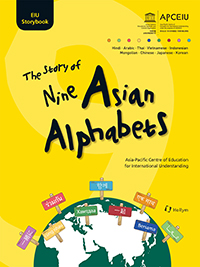
The Story of Nine Asian Alphabets 아시아 아홉 문자 이야기 [영문판]
- 신윤환, 조민석 외 저
- Hollym
- 2016년 11월 01일
-
정가15,000원
-
판매가13,500원 [10% 할인]
-
결제 혜택무이자
카드할인/포인트결제 안내
제휴카드
반디앤루니스 롯데카드 결제금액 최대 25% 청구할인 (1만원 이상 결제건에 한해 월 2회, 건당 최대 1만원 할인) 반디앤루니스 우리V카드 결제금액 10% 청구할인 포인트결제
OK캐쉬백 포인트 최소 10원부터 전액 사용 or 1% 적립 현대카드 M포인트 결제금액의 최대 10% 사용 가능 신한카드 포인트 결제금액의 최대 10% 사용 가능(일부카드) 하나(구.외환) 포인트 보유 한도 내에서 100% 사용 가능 씨티카드 포인트 결제금액의 최대 50% 사용 가능 할인카드
NH농협 TAKE5카드 20% 청구할인(Edu Pack) 채움 플래티늄 멀티카드 20% 청구할인 모바일 Tmoney 신한카드 10% 청구할인 신한카드 Shopping 10% 청구할인 NH농협 체크카드 10% 청구할인 NH20 해봄 신용카드 10% 청구할인 씨티 클리어 카드 7% 청구할인 NH20 해봄 체크카드 5% 청구할인 NH농협 LADY다솜카드 5% 청구할인 신한카드 큐브 5% 청구할인 신한카드 큐브 PLATINUM# 5% 청구할인 
무이자 안내
-
적립금750원 적립 [5%P]
추가 적립금 안내
[2천원 추가 적립]
총 주문금액 5만원 이상 구매 시 2,000원 추가 적립
도서(eBook포함)만 구매 시 적립 대상에서 제외업채배송상품 포함(기프트, 업체배송 등) 5만원[멤버십 추가 적립]
슈퍼루니 : 3% 추가 적립
골드루니 : 2% 추가 적립
실버루니 : 1% 추가 적립
단, 국내도서, eBook만 구매 시 적립 불가
-
배송료15,000원 이상 구매시 무료배송
-
출고예정일
출고예정일 안내
※ 출고예정일은 도서 재고상황에 따라 변동될 수 있습니다.
2026년 04월 15일(수)※ 출고예정일은 도서 재고상황에 따라 변동될 수 있습니다.
당일배송 가능지역 검색
“도로명주소”를 쉽게 찾아보세요
1. 도로명으로 검색하기 (예, “직지길” or “직지길+322”)
2. 건물명으로 검색하기 (예, “반디앤루니스빌딩”)
3. 동(읍/면/리) 으로 검색 (예, “인사동” or “인사동+43”)
4. 도로명주소를 모르실 경우 도로명주소 안내시스템(http://www.juso.go.kr)에서 확인해주세요.
시/도
시/군/구
회원리뷰
ISBN: 9781565914087
295쪽
사이즈 정보 준비중
지금 이책은
- 판매지수 : 112
이 분야의 베스트셀러
-
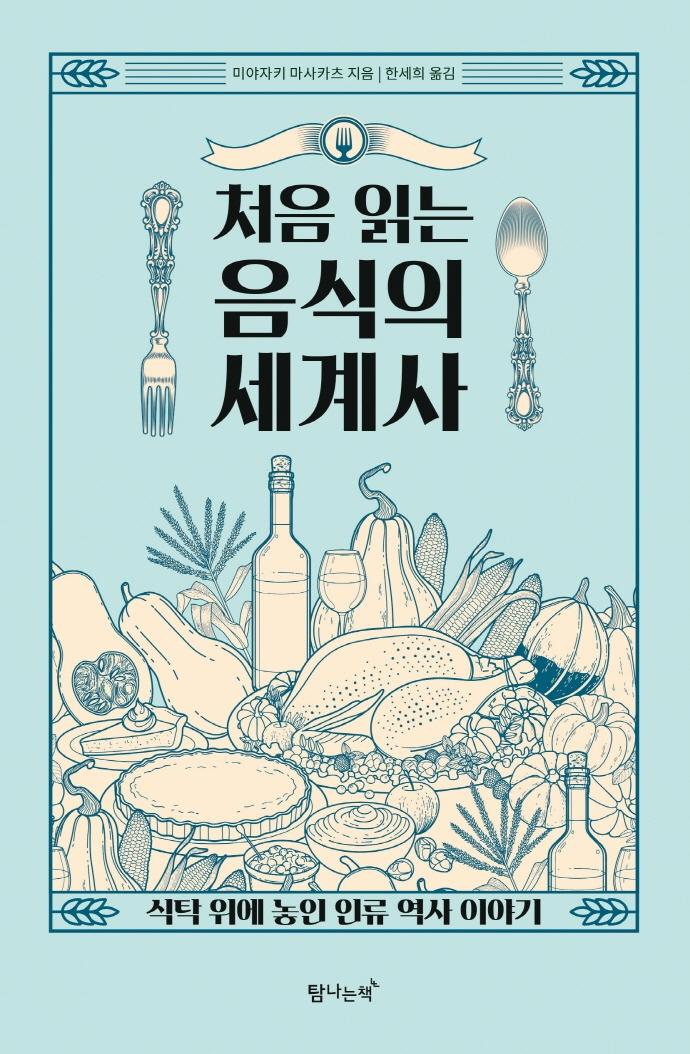 처음 읽는 음식의 세계사
미야자키 마사카츠
14,400원
처음 읽는 음식의 세계사
미야자키 마사카츠
14,400원
-
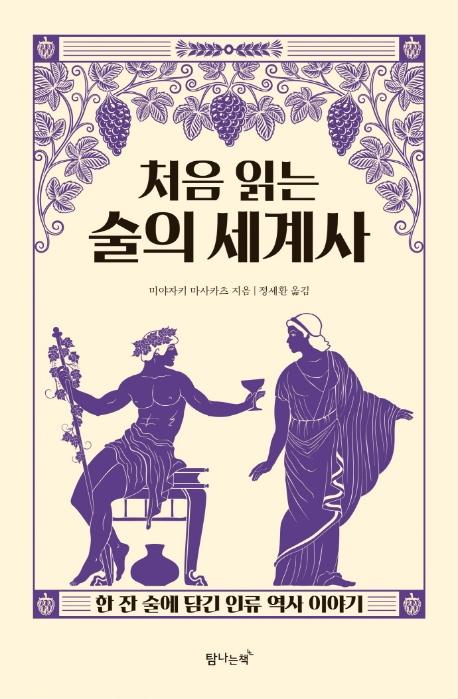 처음 읽는 술의 세계사
미야자키 마사카츠
14,400원
처음 읽는 술의 세계사
미야자키 마사카츠
14,400원
-
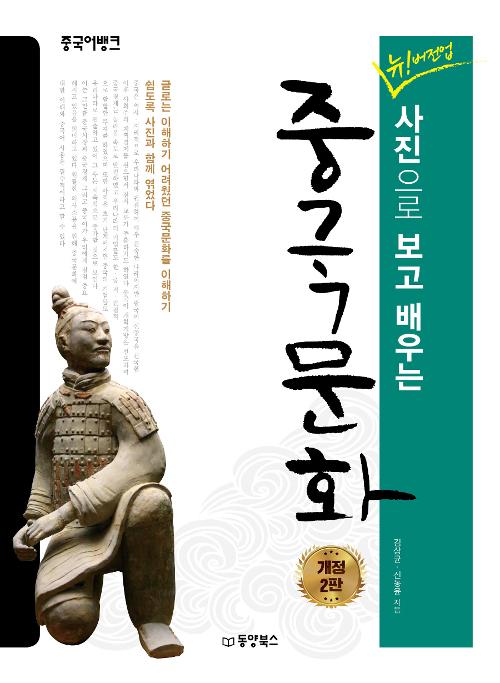 뉴!버전업 사진으로 보고 배우는 중국문화
김상균, 신동윤
15,500원
뉴!버전업 사진으로 보고 배우는 중국문화
김상균, 신동윤
15,500원
ㆍ품절된 상품입니다.
책 소개
출판사 리뷰
2013년 출간된 한글판 『유네스코가 들려주는 아시아 아홉 문자 이야기』 은 2013년 대한출판문화협회 추천 ‘올해의 청소년 도서’에 선정되어 청소년들의 국제 이해를 돕는데 활용되었으며, 인천국제교류재단 주최 ‘아시아 문자전’에 전시되었다. 또한 문화체육관광부와 한국문화예술위원회의 2014년도 문화다양성 출판지원 사업의 지원 도서로 선정되기도 하였다. 이처럼 한글판이 국내에서 높은 호응을 얻었기 때문에, 영문판 또한 향후 해외 주재 문화원에서 아시아 문화 교육 교재로 활용되는 등 해외에서도 널리 이용될 것으로 기대된다. 독자들이 본 도서를 통해 언어와 문자에 담긴 역사와 문화를 배우고, 그 나라에 대한 이해를 증진함으로써 고유 문자를 지키는 것이 인류에게 얼마나 중요한 의미와 가치를 지니는지에 대해서도 생각해볼 수 있기를 희망한다.
Through the Interesting Stories of Nine Asian Alphabets,
Readers Can Learn about Their Culture and History
- Developmental process, unique forms, and calligraphy of Hindi, Arabic, Thai, Vietnamese, Indonesian, Mongolian, Chinese, Japanese, and Korean
- Towards cultural diversity and global citizenship
Hollym announced that it publishes the book titled The Story of Nine Asian Alphabets (softcover; 15,000 KRW; ISBN: 978-1-56591-408-7). The book is planned by The Asia-Pacific Centre of Education for International Understanding (APCEIU), written by Shin Yoon Hwan et al., illustrated by Jo Min Seok. This book is published to enrich the reader’s understanding for diverse writing systems and the respect for the values presented in them. It seeks to share stories on the writing systems of Asia, explaining how they use diverse letters such as Arabic, Chinese, Cyrillic, Latin, and many others.
The story, geared towards young readers age 10-17, includes nine Asian languages which were selected with consideration for geographical balance and linguistic affiliation: Hindi, Arabic, Thai, Vietnamese, Indonesian, Mongolian, Chinese, Japanese, and Korean. The writing systems of these nine languages are introduced in terms of their developmental process, unique forms, and calligraphy.
“To preserve speech and to pass it on, humanity invented letters. Civilizations could be developed through letters, in which knowledge could be preserved, accumulated, and transferred. As a result, not only was remote communication possible but also the build-up of historical consciousness by establishing the prospect of social consensus.
The rise and fall of letters were indicators of power in ancient societies. The Scythia did not leave behind any documents or records because they did not have a writing system. As can be seen from this case, nations that did not have a writing system were quickly forgotten. However, with letters, even minority ethnic groups can be remembered through their great written works.
Language is like music while letters are like pictures. Language is like time while the letter is like space. If music and pictures, time and space come together, writing becomes humanity’s culture itself. Through freedom of expression, language and letters create a consensus in society and an identity for that society. Moreover, they are important elements for peaceful coexistence. Letters were invented to preserve and pass on speech. Letters are the site where the humanity’s soul and knowledge are accumulated.” (pp. 12-13)
Originally published in Korean in 2013 as a product of collaboration with the Ministry of Education of the Republic of Korea, the Korean edition has been widely recognized by Korean readers. Encouraged by the ever increasing global demand to learn about Asian culture and languages, Hollym and APCEIU released this book to hope that the book will stimulate more interest towards cultural diversity and global citizenship which become the basis of mutual resp
저자 소개
기획 유네스코 아시아태평양 국제이해교육원
Planned by Asia-Pacific Centre of Education for International Understanding under the auspices of UNESCO
‘평화의 문화를 위한 교육’이라는 이념 안에서 아시아태평양 지역 47개 유네스코 회원국들과 함께 국제이해교육을 증진, 발전시키기 위해 유네스코 본부와 대한민국 정부 간 협정에 의해 2000년도에 설립된 유네스코 산하기구
Education for International Understanding (EIU) is UNESCO’s important enterprise for dealing with various problems that the international society is facing. EIU which aims to build a Culture of Peace generically conducts education for multicultural understanding, peace education, human rights education, sustainable development education, globalization education and others to create a peaceful and inclusive world for sustainable development. www.unescopceiu.org
글 Written by
이재숙 Lee Jae Sook
한국외국어대학교 인도어과 강사 Instructor, Oriental Languages Program, Hankuk University of Foreign Studies
공지현 Kong Ji-Hyun
한국외국어대학교 통번역대학원 한-아과 강사 Instructor, Arabic Department, Hankuk University of Foreign Studies
김홍구 Kim Hongkoo
부산외국어대학교 태국어과 교수 Professor, Department of Thai, Busan University of Foreign Studies
안경환 Ahn Kyong Hwan
조선대학교 외국어대학 교수 Professor, College of Foreign Studies, Chosun University
신윤환 Shin Yoon Hwan
서강대학교 정치외교학과 교수 Professor, Department of Political Science, Sogang University
김장구 Kim Janggoo
동국대학교 문화학술원 전임연구원 Researcher, Dongguk Academy of Cultural Studies
류동춘 Ryu Dongchoon
서강대학교 중국문화전공 교수 Professor, Department of Chinese Culture, Sogang University
오미영 Oh Miyoung
숭실대학교 일어일본학과 부교수 Professor, Department of Japanese Language and Literature, Soongsil University
정병규 Chung Byoung-Kyoo
정병규디자인 대표 President, Chung Byoung-Kyoo Design
그림 Illustrated by
조민석 Jo Min Seok
목차
Foreword
Preface
Hindi Alphabet of India, Where Gods Live - Lee Jae Sook
The Mysterious and Beautiful Alphabet of Arabic - Kong Ji-Hyun
Easy When You Know It, Thai Letters - Kim Hongkoo
Vietnamese Letters: Uncovering the Mystery Through Understanding Its History - Ahn Kyong Hwan
The Easiest to Learn: Indonesia’s Language and Letters - Shin Yoon Hwan
Mongolian Language and Alphabet: The United Nomads of Mongolia - Kim Janggoo
World’s Oldest Chinese Characters - Ryu Dongchoon
Japanese Letters: Representing Both Sound and Meaning - Oh Miyoung
Korea’s Creative and Scientific Alphabet, Hangeul - Chung Byoung-Kyoo
References
Photo Credits
발간사
서문
신들이 살고 있는 인도의 힌디어 문자 - 이재숙
신기하고 아름다운 아랍의 문자 - 공지현
알고 보면 쉬운 태국의 문자 - 김홍구
발음만 들으면 뜻을 이해할 수 있는 베트남의 문자 - 안경환
세상에서 가장 배우기 쉬운 인도네시아의 말과 문자 - 신윤환
몽골 유목민을 하나로 만든 몽골의 말과 문자 - 김장구
세상에서 가장 오래 사용하고 있는 중국의 한자 - 류동춘
뜻과 소리를 모두 담은 일본의 문자 - 오미영
독창적이고 과학적인 한글 - 정병규
참고 문헌
사진 제공
Preface
Hindi Alphabet of India, Where Gods Live - Lee Jae Sook
The Mysterious and Beautiful Alphabet of Arabic - Kong Ji-Hyun
Easy When You Know It, Thai Letters - Kim Hongkoo
Vietnamese Letters: Uncovering the Mystery Through Understanding Its History - Ahn Kyong Hwan
The Easiest to Learn: Indonesia’s Language and Letters - Shin Yoon Hwan
Mongolian Language and Alphabet: The United Nomads of Mongolia - Kim Janggoo
World’s Oldest Chinese Characters - Ryu Dongchoon
Japanese Letters: Representing Both Sound and Meaning - Oh Miyoung
Korea’s Creative and Scientific Alphabet, Hangeul - Chung Byoung-Kyoo
References
Photo Credits
발간사
서문
신들이 살고 있는 인도의 힌디어 문자 - 이재숙
신기하고 아름다운 아랍의 문자 - 공지현
알고 보면 쉬운 태국의 문자 - 김홍구
발음만 들으면 뜻을 이해할 수 있는 베트남의 문자 - 안경환
세상에서 가장 배우기 쉬운 인도네시아의 말과 문자 - 신윤환
몽골 유목민을 하나로 만든 몽골의 말과 문자 - 김장구
세상에서 가장 오래 사용하고 있는 중국의 한자 - 류동춘
뜻과 소리를 모두 담은 일본의 문자 - 오미영
독창적이고 과학적인 한글 - 정병규
참고 문헌
사진 제공
배송 시 유의사항
- 반디앤루니스에서 구매하신 도서는 물류 대행 위탁업체 웅진 북센을 통해 배송됩니다.
(배송 포장에 "웅진 북센"으로 표기될 수 있습니다.)
- 구매한 상품의 품질과 배송 관련 문의는 반디앤루니스로 문의 바랍니다.
- 천재지변 및 택배사의 사정에 따라 배송이 지연될 수 있습니다.
- 결제(입금) 완료 후 출판사 및 유통사의 사정으로 품절 또는 절판 되어 상품 구입이 어려울 수 있습니다. (별도 안내 예정)
- 도서산간지역의 경우 추가 배송비가 발생될 수 있습니다.
반품/교환
상품 설명에 반품/ 교환 관련한 안내가 있는 경우 그 내용을 우선으로 합니다. (업체 사정에 따라 달라질 수 있습니다)
반품/교환
-
반품/교환 반품/교환 방법 홈 > 고객센터 > 자주찾는질문 “반품/교환/환불” 안내 참고 또는 1:1상담게시판 반품/교환 가능 기간 반품,교환은 배송완료 후 7일 이내, 상품의 결함 및 계약내용과 다를 경우 문제발견 후 30일 이내에 신청가능 반품/교환 비용 변심 혹은 구매착오의 경우에만 반송료 고객 부담(별도 지정 택배사 없음) 반품/교환 불가 사유 - 소비자의 책임 사유로 상품 등이 손실 또는 훼손된 경우
- 소비자의 사용, 포장 개봉에 의해 상품 등의 가치가 현저히 감소한 경우
- 복제가 가능한 상품 등의 포장을 훼손한 경우 : 예)만화책, 잡지, 화보집 등
- 시간의 경과에 의해 재판매가 곤란한 정도로 가치가 현저히 감소한 경우
- 전자상거래등에서의 소비자보호에 관한 법률이 정하는 소비자 청약철회 제한 내용에 해당되는 경우
- 해외주문 상품(해외 원서)의 경우(파본/훼손/오발송 상품을 제외)
소비자 피해보상
환불지연에 따른 배상- 상품의 불량에 의한 반품, 교환, A/S, 환불, 품질보증 및 피해보상 등에 관한 사항은
소비자 분쟁해결 기준(공정거래위원회고시)에 준하여 처리됨 - 대금 환불 및 환불지연에 따른 배상금 지급 조건, 절차 등은 전자상거래 등에서의
소비자 보호에 관한 법률에 따라 처리함
반품/교환 주소 경기도 파주시 문발로 77, 웅진북센(반디앤루니스)
