


- 주문상품수량
- 개
- 예상적립금
P - 상품할인금
- 원
- 배송료
- 원
- 주문합계
- 원
네비게이션 실시간 인기 책
![격몽요결 Gyeogmongyogyeol [영문+한글+한문판]](http://image.bandinlunis.com/upload/product/3524/3524796.jpg)
격몽요결 Gyeogmongyogyeol [영문+한글+한문판]
- 이광호 저
- 럭스미디어
- 2012년 10월 15일
-
정가15,000원
-
판매가13,500원 [10% 할인]
-
결제 혜택무이자
카드할인/포인트결제 안내
제휴카드
반디앤루니스 롯데카드 결제금액 최대 25% 청구할인 (1만원 이상 결제건에 한해 월 2회, 건당 최대 1만원 할인) 반디앤루니스 우리V카드 결제금액 10% 청구할인 포인트결제
OK캐쉬백 포인트 최소 10원부터 전액 사용 or 1% 적립 현대카드 M포인트 결제금액의 최대 10% 사용 가능 신한카드 포인트 결제금액의 최대 10% 사용 가능(일부카드) 하나(구.외환) 포인트 보유 한도 내에서 100% 사용 가능 씨티카드 포인트 결제금액의 최대 50% 사용 가능 할인카드
NH농협 TAKE5카드 20% 청구할인(Edu Pack) 채움 플래티늄 멀티카드 20% 청구할인 모바일 Tmoney 신한카드 10% 청구할인 신한카드 Shopping 10% 청구할인 NH농협 체크카드 10% 청구할인 NH20 해봄 신용카드 10% 청구할인 씨티 클리어 카드 7% 청구할인 NH20 해봄 체크카드 5% 청구할인 NH농협 LADY다솜카드 5% 청구할인 신한카드 큐브 5% 청구할인 신한카드 큐브 PLATINUM# 5% 청구할인 
무이자 안내
-
적립금750원 적립 [5%P]
추가 적립금 안내
[2천원 추가 적립]
총 주문금액 5만원 이상 구매 시 2,000원 추가 적립
도서(eBook포함)만 구매 시 적립 대상에서 제외업채배송상품 포함(기프트, 업체배송 등) 5만원[멤버십 추가 적립]
슈퍼루니 : 3% 추가 적립
골드루니 : 2% 추가 적립
실버루니 : 1% 추가 적립
단, 국내도서, eBook만 구매 시 적립 불가
품절된 상품입니다.
회원리뷰
ISBN: 9788962340778
164쪽
133 x 203 (㎜)
지금 이책은
- 판매지수 : 112
이 분야의 베스트셀러
-
 한중록
혜경궁 홍씨
10,800원
한중록
혜경궁 홍씨
10,800원
-
 노르웨이의 숲-세계문학전집310
무라카미 하루키
12,600원
노르웨이의 숲-세계문학전집310
무라카미 하루키
12,600원
-
 양반전 외
박지원, 송창현
6,300원
양반전 외
박지원, 송창현
6,300원
책 소개
출판사 리뷰
About This Book
“On the Secret of Expelling Ignorance: Gyeogmongyogyeol”is a systematic guide to learning that was given to the students of Confucianism at the national academy of Sungkyunkwan. The book consists of ten chapters, each presenting ten virtues that a student must follow throughout his ...
About This Book
“On the Secret of Expelling Ignorance: Gyeogmongyogyeol”is a systematic guide to learning that was given to the students of Confucianism at the national academy of Sungkyunkwan. The book consists of ten chapters, each presenting ten virtues that a student must follow throughout his course of learning.
Translator’s Note
The English translation may differ from the original Chinese text as it referred to the 1968 Korean translation of Gyeogmongyogyeol. The Korean translation and the original Chinese text written by Yi I are in the courtesy of Institute for the Translation of Korean Classics.
Introduction
Men born into this world cannot become truly humane without learning. What we call learning is not something estranged or distinct. Only, it is just for a father to be benevolent , a son faithful, the ruled loyal, with propriety between spouses, love between brothers, trust between friends and respect for the elders. In daily life, all work should be accorded its own worth and a man must not pursue the unnatural or mind with the mysterious . A man who is not learned, however, has a heart that is stagnant, because his perspective is limited. He must read, and then, after considering the truth in those lines and enlightening the path of learning, it is possible to realise that taking the path is virtuous and accomplishing it brings justice to his actions. Men nowadays do not know that learning may be found in their daily lives and believe that it is intangibly high and far, difficult to grasp. Likewise, learning is left to the great men and is given up by the common people. How pitiful this is! When I was at the south of Haesan(해산海山), one or two students came to me and asked about learning. Although I was embarrassed to be thought worthy to be a teacher, I was worried about these men who did not know the direction of their actions in the path of learning. If men undertake learning without adamant will, such learning, helpful to none, will only be scorned by others. Thus, I write a book briefly on ways to establish the spirit , admonish the body, revere parents and serve others, and in doing so I name the book “On the Secret of Expelling Ignorance (Gyeogmongyogyeol ㆍ 격몽요결 ㆍ 擊蒙要訣)”. I endeavour to make students read these lines and cleanse their hearts to immediately settle upon their studies. I, who also have agonized over the old habits to which I have become accustomed, will also place myself in the vigilance of introspection through these lines.
서 ㆍ 序
사람이 이 세상에 나서 학문이 아니면 사람다운 사람이 될 수 없다. 이른바, 학문이란 것은 역시 이상스럽고 별다른 것이 아니다. 그저 아비 된 자는 자애로워야 하며, 자식 된 자는 효도해야 하고, 신하 된 자는 충성해야 하며, 부부간에는 분별이 있어야 하고, 형제간에는 우애로워야 하며, 젊은이는 어른을 공경해야 하고, 친구 간에는 신의가 있어야 하는 것이다. 일상의 모든 일에 있어서 일에 따라 각기 마땅한 것을 취할 뿐이요, 현묘한 것에 마음을 두어 기이한 것을 노려서는 안 된다. 그러나 학문하지 않은 사람은 마음이 꽉 막혀 있고 식견이 좁기 때문에 모름지기 글을 읽고 그 이치를 연구하여 행해야 할 길을 밝힌 뒤에야 학문에 나아가는 것이 올바름을 얻고 실천함이 합당함을 얻을 수 있게 될 것이다. 요즘 사람들은 학문이 일상생활에 있는 줄은 모르고 망녕되게 높고 멀어 행하기 어려운 것이라 생각한다. 그리하여 특별한 사람에게 미루고 자기는 자포자기하니, 얼마나 가엾은 일인가. 내가 해산(海山)의 남쪽에 있을 때 한두 학생이 찾아와 학문을 물었다. 내가 스승이 될 만한 게 없음을 부끄럽게 여기면서도 처음 학문하는 사람들이 방향을 모르고, 굳은 의지도 없으면서 그냥 배우겠다고 한다면 피차에 도움 될 것이 없고 도리어 남의 조롱만 사게 될까 걱정스러웠다. 그래서 간략하게 책 한 권을 써서 마음을 세우고, 몸을 신칙[飭躬]하고, 부모를 봉양하고, 남을 접대하는 방법을 대략 서술하여 《격몽요결》이라 이름하였다. 학생들로 하여금 이것을 읽고서 마음을 씻고 즉시 공부에 착수하게 하고자 한다. 나 역시 오랫동안 구습에 얽매여 괴로워하던 차에 이것으로 스스로를 경계하고 반성하고자 한다.
Written by Yi I ㆍ 이이 ㆍ 李珥
저자 소개
저자 이이는 He was born in Gangneung, Gangwon Province in 1536. His father was a civil servant and his mother was Shin Saimdang, an accomplished literary figure and an artist. Yi I, a literary genius, mastered the Confucian classics and passed the civil entrance exam at the age of thirteen. In his years in office, Yi I served in various ministry positions and became a central political figure in the dynasty by the age of forty. However, due to political conflicts, he left office in 1576. He continued to be prolific in his philosophical and political writing until he returned to office at the age of forty-five. Despite his attempt to alleviate the tension between various political sects, he was fruitless and again left office in 1583. In the following year, he passed away. Known as the most prominent Confucian philosopher in Korea along with Yi Hwang, his grand work in the Qui theory and many other political and philosophical ideas had affected the generations of thinkers and politicians that came after him.
책 속에서
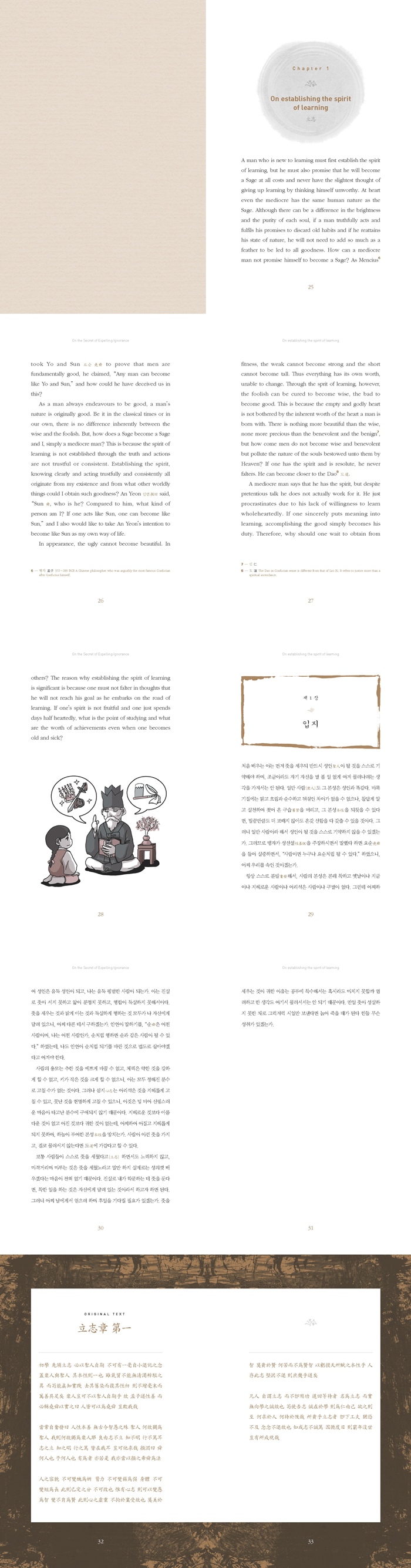
목차
목차
Acknowledgement
Preface
Introduction ㆍ 서 ㆍ 序
Chapter 1 -On establishing the spirit of learning ㆍ 입지 ㆍ 立志
Chapter 2 -On changing old habits ㆍ 혁구습 ㆍ 革舊習
Chapter 3 -On conducting oneself ㆍ 지신 ㆍ 持身
Chapter 4 -On reading ㆍ 독서 ㆍ 讀書
Chapter 5 -On how to treat parents ㆍ 사친 ㆍ 事親
Chapter 6 -On the rites of funerals ㆍ 상제 ㆍ 喪祭
Chapter 7 -On the rites of ancestral rituals ㆍ 제례 ㆍ 祭禮
Chapter 8 -On how to reside in one’ s own house ㆍ 거가 ㆍ 居家
Chapter 9 -On how to treat others ㆍ 접인 ㆍ 接人
Chapter 10 -On the conduct of life ㆍ 처세 ㆍ 處世
Acknowledgement
Preface
Introduction ㆍ 서 ㆍ 序
Chapter 1 -On establishing the spirit of learning ㆍ 입지 ㆍ 立志
Chapter 2 -On changing old habits ㆍ 혁구습 ㆍ 革舊習
Chapter 3 -On conducting oneself ㆍ 지신 ㆍ 持身
Chapter 4 -On reading ㆍ 독서 ㆍ 讀書
Chapter 5 -On how to treat parents ㆍ 사친 ㆍ 事親
Chapter 6 -On the rites of funerals ㆍ 상제 ㆍ 喪祭
Chapter 7 -On the rites of ancestral rituals ㆍ 제례 ㆍ 祭禮
Chapter 8 -On how to reside in one’ s own house ㆍ 거가 ㆍ 居家
Chapter 9 -On how to treat others ㆍ 접인 ㆍ 接人
Chapter 10 -On the conduct of life ㆍ 처세 ㆍ 處世
머리말
Introduction
Men born into this world cannot become truly humane without learning. What we call learning is not something estranged or distinct. Only, it is just for a father to be benevolent , a son faithful, the ruled loyal, with propriety between spouses, love between brothers, trust between friends and respect for the elders. In daily life, all work should be accorded its own worth and a man must not pursue the unnatural or mind with the mysterious . A man who is not learned, however, has a heart that is stagnant, because his perspective is limited. He must read, and then, after considering the truth in those lines and enlightening the path of learning, it is possible to realise that taking the path is virtuous and accomplishing it brings justice to his actions. Men nowadays do not know that learning may be found in their daily lives and believe that it is intangibly high and far, difficult to grasp. Likewise, learning is left to the great men and is given up by the common people. How pitiful this is! When I was at the south of Haesan(해산海山), one or two students came to me and asked about learning. Although I was embarrassed to be thought worthy to be a teacher, I was worried about these men who did not know the direction of their actions in the path of learning. If men undertake learning without adamant will, such learning, helpful to none, will only be scorned by others. Thus, I write a book briefly on ways to establish the spirit , admonish the body, revere parents and serve others, and in doing so I name the book “On the Secret of Expelling Ignorance (Gyeogmongyogyeol • 격몽요결 • 擊蒙要訣)”. I endeavour to make students read these lines and cleanse their hearts to immediately settle upon their studies. I, who also have agonized over the old habits to which I have become accustomed, will also place myself in the vigilance of introspection through these lines.
서 • 序
사람이 이 세상에 나서 학문이 아니면 사람다운 사람이 될 수 없다. 이른바, 학문이란 것은 역시 이상스럽고 별다른 것이 아니다. 그저 아비 된 자는 자애로워야 하며, 자식 된 자는 효도해야 하고, 신하 된 자는 충성해야 하며, 부부간에는 분별이 있어야 하고, 형제간에는 우애로워야 하며, 젊은이는 어른을 공경해야 하고, 친구 간에는 신의가 있어야 하는 것이다. 일상의 모든 일에 있어서 일에 따라 각기 마땅한 것을 취할 뿐이요, 현묘한 것에 마음을 두어 기이한 것을 노려서는 안 된다. 그러나 학문하지 않은 사람은 마음이 꽉 막혀 있고 식견이 좁기 때문에 모름지기 글을 읽고 그 이치를 연구하여 행해야 할 길을 밝힌 뒤에야 학문에 나아가는 것이 올바름을 얻고 실천함이 합당함을 얻을 수 있게 될 것이다. 요즘 사람들은 학문이 일상생활에 있는 줄은 모르고 망녕되게 높고 멀어 행하기 어려운 것이라 생각한다. 그리하여 특별한 사람에게 미루고 자기는 자포자기하니, 얼마나 가엾은 일인가. 내가 해산(海山)의 남쪽에 있을 때 한두 학생이 찾아와 학문을 물었다. 내가 스승이 될 만한 게 없음을 부끄럽게 여기면서도 처음 학문하는 사람들이 방향을 모르고, 굳은 의지도 없으면서 그냥 배우겠다고 한다면 피차에 도움 될 것이 없고 도리어 남의 조롱만 사게 될까 걱정스러웠다. 그래서 간략하게 책 한 권을 써서 마음을 세우고, 몸을 신칙[飭躬]하고, 부모를 봉양하고, 남을 접대하는 방법을 대략 서술하여 《격몽요결》이라 이름하였다. 학생들로 하여금 이것을 읽고서 마음을 씻고 즉시 공부에 착수하게 하고자 한다. 나 역시 오랫동안 구습에 얽매여 괴로워하던 차에 이것으로 스스로를 경계하고 반성하고자 한다.
Written by Yi I • 이이 • 李珥
Men born into this world cannot become truly humane without learning. What we call learning is not something estranged or distinct. Only, it is just for a father to be benevolent , a son faithful, the ruled loyal, with propriety between spouses, love between brothers, trust between friends and respect for the elders. In daily life, all work should be accorded its own worth and a man must not pursue the unnatural or mind with the mysterious . A man who is not learned, however, has a heart that is stagnant, because his perspective is limited. He must read, and then, after considering the truth in those lines and enlightening the path of learning, it is possible to realise that taking the path is virtuous and accomplishing it brings justice to his actions. Men nowadays do not know that learning may be found in their daily lives and believe that it is intangibly high and far, difficult to grasp. Likewise, learning is left to the great men and is given up by the common people. How pitiful this is! When I was at the south of Haesan(해산海山), one or two students came to me and asked about learning. Although I was embarrassed to be thought worthy to be a teacher, I was worried about these men who did not know the direction of their actions in the path of learning. If men undertake learning without adamant will, such learning, helpful to none, will only be scorned by others. Thus, I write a book briefly on ways to establish the spirit , admonish the body, revere parents and serve others, and in doing so I name the book “On the Secret of Expelling Ignorance (Gyeogmongyogyeol • 격몽요결 • 擊蒙要訣)”. I endeavour to make students read these lines and cleanse their hearts to immediately settle upon their studies. I, who also have agonized over the old habits to which I have become accustomed, will also place myself in the vigilance of introspection through these lines.
서 • 序
사람이 이 세상에 나서 학문이 아니면 사람다운 사람이 될 수 없다. 이른바, 학문이란 것은 역시 이상스럽고 별다른 것이 아니다. 그저 아비 된 자는 자애로워야 하며, 자식 된 자는 효도해야 하고, 신하 된 자는 충성해야 하며, 부부간에는 분별이 있어야 하고, 형제간에는 우애로워야 하며, 젊은이는 어른을 공경해야 하고, 친구 간에는 신의가 있어야 하는 것이다. 일상의 모든 일에 있어서 일에 따라 각기 마땅한 것을 취할 뿐이요, 현묘한 것에 마음을 두어 기이한 것을 노려서는 안 된다. 그러나 학문하지 않은 사람은 마음이 꽉 막혀 있고 식견이 좁기 때문에 모름지기 글을 읽고 그 이치를 연구하여 행해야 할 길을 밝힌 뒤에야 학문에 나아가는 것이 올바름을 얻고 실천함이 합당함을 얻을 수 있게 될 것이다. 요즘 사람들은 학문이 일상생활에 있는 줄은 모르고 망녕되게 높고 멀어 행하기 어려운 것이라 생각한다. 그리하여 특별한 사람에게 미루고 자기는 자포자기하니, 얼마나 가엾은 일인가. 내가 해산(海山)의 남쪽에 있을 때 한두 학생이 찾아와 학문을 물었다. 내가 스승이 될 만한 게 없음을 부끄럽게 여기면서도 처음 학문하는 사람들이 방향을 모르고, 굳은 의지도 없으면서 그냥 배우겠다고 한다면 피차에 도움 될 것이 없고 도리어 남의 조롱만 사게 될까 걱정스러웠다. 그래서 간략하게 책 한 권을 써서 마음을 세우고, 몸을 신칙[飭躬]하고, 부모를 봉양하고, 남을 접대하는 방법을 대략 서술하여 《격몽요결》이라 이름하였다. 학생들로 하여금 이것을 읽고서 마음을 씻고 즉시 공부에 착수하게 하고자 한다. 나 역시 오랫동안 구습에 얽매여 괴로워하던 차에 이것으로 스스로를 경계하고 반성하고자 한다.
Written by Yi I • 이이 • 李珥
배송 시 유의사항
- 반디앤루니스에서 구매하신 도서는 물류 대행 위탁업체 웅진 북센을 통해 배송됩니다.
(배송 포장에 "웅진 북센"으로 표기될 수 있습니다.)
- 구매한 상품의 품질과 배송 관련 문의는 반디앤루니스로 문의 바랍니다.
- 천재지변 및 택배사의 사정에 따라 배송이 지연될 수 있습니다.
- 결제(입금) 완료 후 출판사 및 유통사의 사정으로 품절 또는 절판 되어 상품 구입이 어려울 수 있습니다. (별도 안내 예정)
- 도서산간지역의 경우 추가 배송비가 발생될 수 있습니다.
반품/교환
상품 설명에 반품/ 교환 관련한 안내가 있는 경우 그 내용을 우선으로 합니다. (업체 사정에 따라 달라질 수 있습니다)
반품/교환
-
반품/교환 반품/교환 방법 홈 > 고객센터 > 자주찾는질문 “반품/교환/환불” 안내 참고 또는 1:1상담게시판 반품/교환 가능 기간 반품,교환은 배송완료 후 7일 이내, 상품의 결함 및 계약내용과 다를 경우 문제발견 후 30일 이내에 신청가능 반품/교환 비용 변심 혹은 구매착오의 경우에만 반송료 고객 부담(별도 지정 택배사 없음) 반품/교환 불가 사유 - 소비자의 책임 사유로 상품 등이 손실 또는 훼손된 경우
- 소비자의 사용, 포장 개봉에 의해 상품 등의 가치가 현저히 감소한 경우
- 복제가 가능한 상품 등의 포장을 훼손한 경우 : 예)만화책, 잡지, 화보집 등
- 시간의 경과에 의해 재판매가 곤란한 정도로 가치가 현저히 감소한 경우
- 전자상거래등에서의 소비자보호에 관한 법률이 정하는 소비자 청약철회 제한 내용에 해당되는 경우
- 해외주문 상품(해외 원서)의 경우(파본/훼손/오발송 상품을 제외)
소비자 피해보상
환불지연에 따른 배상- 상품의 불량에 의한 반품, 교환, A/S, 환불, 품질보증 및 피해보상 등에 관한 사항은
소비자 분쟁해결 기준(공정거래위원회고시)에 준하여 처리됨 - 대금 환불 및 환불지연에 따른 배상금 지급 조건, 절차 등은 전자상거래 등에서의
소비자 보호에 관한 법률에 따라 처리함
반품/교환 주소 경기도 파주시 문발로 77, 웅진북센(반디앤루니스)
